
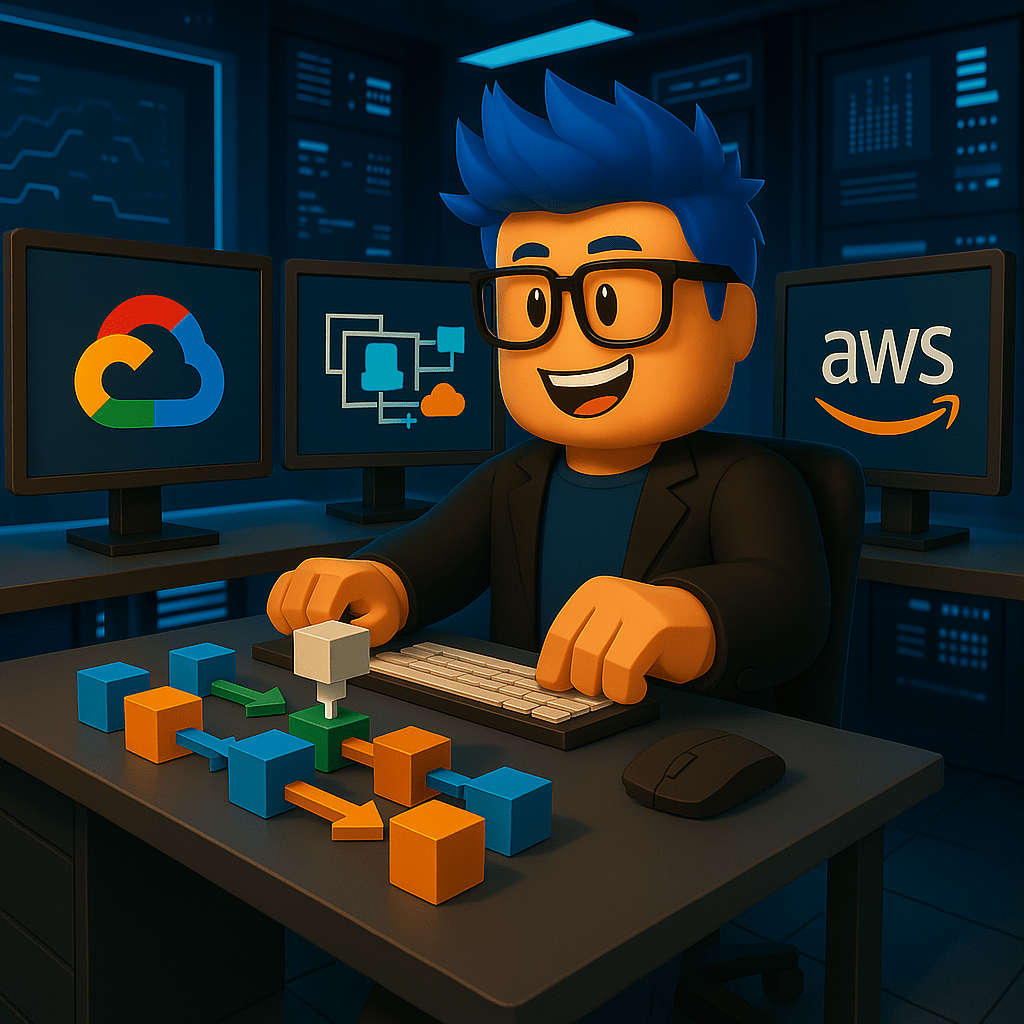
From pipelines to predictive models, here’s how AI is transforming the modern data stack.
🔧 Data Engineering Is Evolving — Fast
Data engineering used to be about ETL pipelines, schemas, and data lakes.
But in 2025, it’s no longer just about moving data — it’s about making data smart.
With the rise of AI-powered tools, data engineers today are doing more than ever:
- Automating routine tasks
- Detecting anomalies in real-time
- Predicting pipeline failures
- Creating self-optimizing infrastructure
In this article, we’ll break down how AI is actively transforming data engineering workflows — and what it means for the future of the role.
🚀 1. Intelligent ETL: AI-Enhanced Pipelines
AI is turning static pipelines into adaptive, self-healing systems.
Examples:
- 🧩 Auto schema inference & evolution: AI detects changes in upstream sources and suggests schema updates (with tests).
- 🔁 Dynamic transformation logic: ML models detect patterns in data and suggest optimal transformations.
- 🔍 Drift detection: Identify when new data deviates from expected distributions — and flag it before things break downstream.
Tool spotlight:
- Datafold — ML-based data diffing
- Monte Carlo — AI-driven data observability
- Prophecy — Low-code AI-assisted pipeline builder
🧪 2. Data Quality & Observability Powered by AI
Instead of manually writing 100+ tests, AI now helps data engineers detect issues before they become problems.
Key wins:
- Predictive alerting: Know when a DAG is likely to fail — before it does
- Auto-generated tests based on lineage
- AI suggestions for missing null checks or column validations
What this means:
You spend less time firefighting and more time optimizing data products.
🧠 3. Smart Documentation & Lineage Tracking
Let’s be honest — documentation is every engineer’s afterthought.
Now? AI does it for you.
- 📝 Auto-descriptions for columns and tables
- 📈 Visual lineage graphs updated in real time
- 🤖 Chat interfaces for “Explain this table” queries
Tool spotlight:
- Atlan – Metadata platform with AI copilot
- Castor – Smart data cataloging and AI-powered search
- DataHub – AI-augmented lineage + search at scale
⛓ 4. Pipeline Generation via Natural Language
We’re entering the age of prompt-to-pipeline.
Engineers can now type:
“Ingest product sales data from BigQuery and clean out null SKUs, then load to Snowflake”
…and get:
- Generated SQL
- Auto DAG scripts
- Suggested dbt models
This radically shortens development cycles — and lowers the barrier for junior engineers.
Tool spotlight:
- dbt Cloud + dbt Labs’ AI assistant
- Text2SQL tools via GPT-4 or OSS LLMs
- DataGPT – conversational analytics & modeling
💡 5. Model Ops & Feature Engineering Simplified
AI now supports the data-to-ML handoff by:
- Suggesting features based on data patterns
- Detecting data leakage or multicollinearity
- Validating model inputs before deployment
- Auto-scaling or decommissioning stale feature pipelines
📦 Integration examples:
- Feature stores with AI cleaning (e.g., Feast + AI profiler)
- Vertex AI Pipelines using auto-triggered ingestion
- Kensho-style data prep agents (coming soon)
🔧 How This Affects the Data Engineer Role
The rise of AI doesn’t replace data engineers — it amplifies them.
| Traditional | Now with AI |
|---|---|
| Write SQL by hand | Use AI to generate + explain SQL |
| Manually monitor DAGs | Predict failures + auto-heal |
| Write all docs yourself | Generate + refine with AI |
| Chase data bugs | AI alerts on drift + anomalies |
| Pipeline from scratch | Prompt-to-pipeline bootstrapping |
🧠 My Real-World Take
As a former data engineer, I’ve spent years building data pipelines the traditional, labor-intensive way — hand-coding ingestion scripts, transformation logic, and orchestration flows primarily within Google Cloud Platform (GCP) and Amazon Web Services (AWS). From crafting custom Dataflow jobs, managing Pub/Sub pipelines, to fine-tuning Glue jobs and Lambda triggers, I’ve experienced firsthand the complexity and meticulous effort required to keep data flowing reliably across distributed systems. While powerful, these setups often demanded hours of manual configuration, error handling, and ongoing maintenance — long before modern AI tools entered the picture.
Today, I can:
- Use ChatGPT to scaffold ingestion pipelines
- Let LLMs explain and summarize models to business users
- Plug AI-based anomaly detection into my data lake for early warnings
It’s not just about speed — it’s about confidence, clarity, and creativity.
🔮 Final Thoughts: AI Is a Co-Engineer, Not a Replacement
AI is transforming data engineering from a “backend plumbing” role into a data product architect’s role — focused on:
- Strategy
- Data contracts
- Enablement
- Scale
The engineers who embrace AI tools will: ✅ Deliver faster
✅ Automate smarter
✅ Lead better
 Roflox - Improving Flow-Ops
Leave a comment